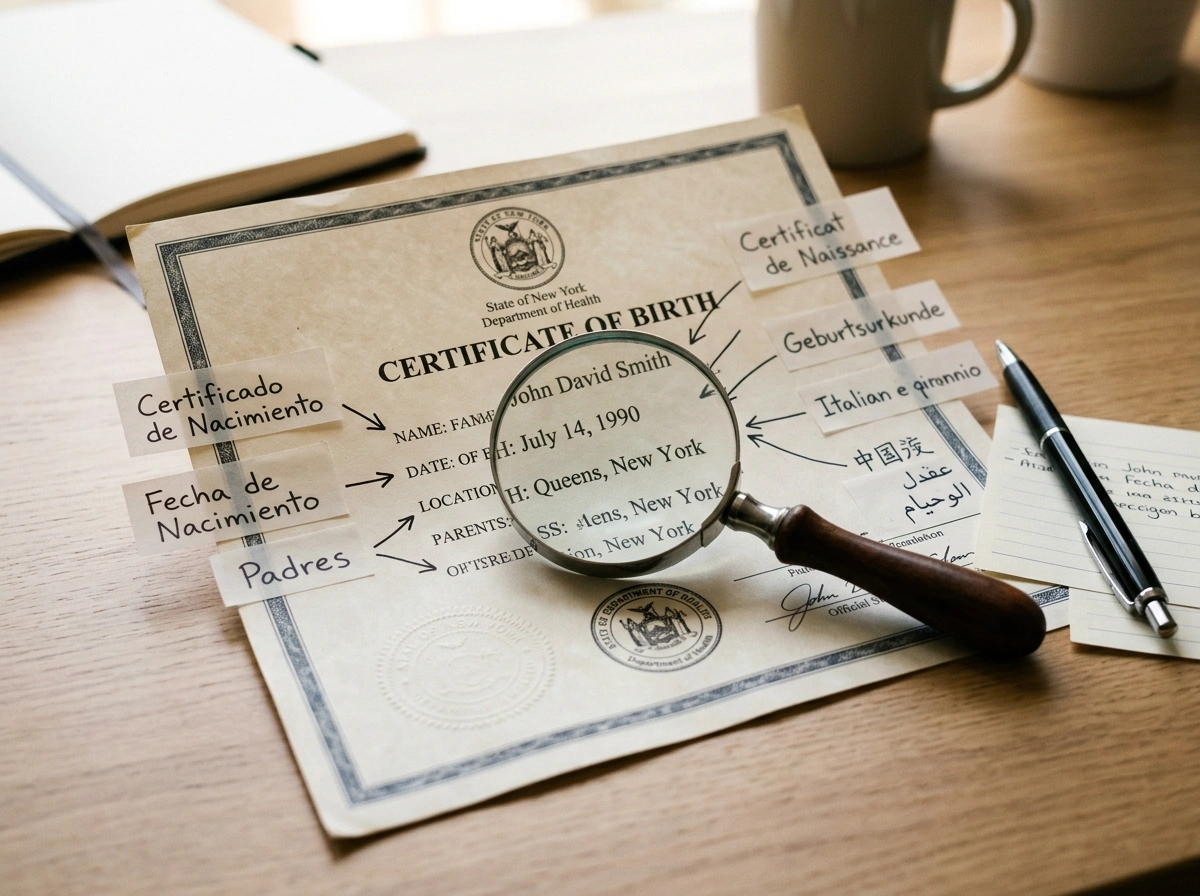
Moving to a new country, applying for a visa, or enrolling in a foreign university often requires a mountain of paperwork. Among these requirements, a translated birth certificate stands out as one of the most critical documents. Submitting an inaccurate or improperly formatted translation can lead to costly delays or outright rejections by immigration authorities and other official bodies.
Many people begin this process by typing birth certificate translation near me into a search engine. Finding a local provider seems like the most convenient option. You can walk into an office, hand over your documents, and speak to someone face-to-face.
However, not every local translation agency has the expertise or credentials required for official documents. Asking the right questions before you hand over your sensitive personal information is essential. This guide covers the essential questions you need to ask prospective translation services. By keeping these criteria in mind, you will find a reliable provider who meets strict government standards and protects your privacy.
Is the translation certified and USCIS-accepted?
Government agencies have strict rules regarding foreign language documents. United States Citizenship and Immigration Services (USCIS), for example, requires a certified translation for any non-English birth certificate. A simple word-for-word translation by a bilingual friend will not be accepted.
When evaluating a local service, your first question must be about their certification process. A certified translation includes a signed statement from the translator or the translation company. This statement affirms that the translated text is an accurate and complete representation of the original document.
Ask the agency if they guarantee USCIS acceptance. Experienced providers understand the specific formatting and certification language required by federal agencies. If a local shop cannot confidently guarantee that their work meets USCIS standards, you should look elsewhere. Submitting a non-compliant document can cause your immigration application to be delayed or denied.
What is the typical turnaround time for local services?
Official applications often come with strict deadlines. You cannot afford to wait weeks for a single document to be translated. You must ask potential providers about their standard turnaround times.
Many traditional local agencies take several days to process a one-page birth certificate. They might have a backlog of projects or rely on freelance translators who work on their own schedules. If you are in a rush, you need to know if the provider offers expedited processing.
Specialized professional services often provide much faster timelines. Some industry leaders can deliver a certified translation of a standard birth certificate in just 24 hours. They may also offer expedited options that cut standard processing times in half. Always clarify the exact delivery date and time before you agree to a service contract. Ensure that the agency can meet your deadline without compromising the accuracy of the translation.
How do you ensure the security and confidentiality of my documents?
A birth certificate contains highly sensitive personal information. It lists your full name, date of birth, place of birth, and your parents’ details. Handing this document over to a stranger requires a high level of trust. Identity theft is a serious concern, and your translation provider must have robust security measures in place.
Ask the agency how they store and transmit your files. Do they use encrypted digital platforms? Who exactly will have access to your document? Reputable translation companies enforce strict confidentiality agreements with all their employees and contractors.
Inquire about their data retention policies. Find out how long they keep copies of your documents after the translation is complete. A trustworthy provider will permanently delete your personal files from their servers once you confirm receipt of the final product. Your privacy should be a top priority for any business handling official records.
What are the qualifications of your translators?
Accuracy is non-negotiable when dealing with legal and immigration documents. A minor typo in a name or a mistranslated date can invalidate the entire certificate. Therefore, you must verify the credentials of the people doing the actual work.
Find out if the agency uses native speakers of the target language. Translating a document requires more than just knowing vocabulary. The translator must understand the specific legal terminology and cultural nuances associated with civil registry documents in both countries.
Ask if their team members belong to recognized professional organizations. Translators who are members of the American Translators Association (ATA) have demonstrated a commitment to professional standards and ongoing education. Relying on certified professionals significantly reduces the risk of errors. You want peace of mind knowing that an experienced expert is handling your birth certificate, rather than an automated software program or an unqualified amateur.
Are there hidden fees or extra costs for certification?
Pricing transparency is a major factor when selecting a translation service. Some local businesses advertise a low base rate to get you in the door. Then, they add unexpected fees for essential services like certification, formatting, or physical copies.
You should ask for a comprehensive quote upfront. Clarify whether they charge by the word, by the hour, or by the page. A per-page pricing model is often the most predictable for birth certificates. For instance, some top-tier online services charge a flat rate of around $29.95 per page for up to 250 words.
Make sure you understand what is included in that base price. Does the cost cover the signed certificate of accuracy? Will you be charged extra if the document contains complex formatting or hard-to-read handwritten text? Furthermore, if you need a notarized copy or an Apostille for international use, ask about those specific fees. Knowing the total cost in advance helps you compare providers and avoid unpleasant surprises on your final bill.
Do you provide a digital copy as well as a physical copy?
The way you submit official documents depends entirely on the requesting institution. Many government portals and universities now accept digital uploads for their application processes. Others still require a hard copy with a wet-ink signature.
Always check what formats the translation agency provides. A modern service should email you a secure, high-resolution PDF of the certified translation as soon as it is complete. This digital version is usually sufficient for online USCIS applications.
If you need a physical document, ask about their printing and shipping policies. Will they mail the hard copy directly to your home or attorney’s office? Find out if standard shipping is included in the price or if you have to pay a premium for priority mail. Having access to both digital and physical copies ensures you are prepared for any submission requirement.
How does the ‘near me’ search compare to online specialized services?
While visiting a local office feels reassuring, it is not always the most efficient choice. Local print shops or small agencies may offer translation as a secondary service. They might lack the specific expertise required for complex legal documents or rare languages.
Dedicated online translation services handle thousands of birth certificates every year. Their streamlined processes often result in faster turnarounds and lower costs. Because they employ large networks of certified translators, they can easily accommodate over 100 different languages at any time.
Online providers also offer unmatched convenience. You can simply take a clear photo or scan of your birth certificate and upload it from your phone. There is no need to drive across town, find parking, and wait in line. While a local search is a good starting point, expanding your options to specialized national providers often yields better, more reliable results.
Frequently Asked Questions About Document Translation
What happens if my birth certificate has hard-to-read handwriting?
Many older birth certificates feature cursive handwriting that has faded over time. Professional translation services have experts trained in deciphering historical documents. You should inform the agency about the handwritten sections upfront. Some companies charge a small additional fee for this service, as it requires extra time and specialized knowledge to ensure total accuracy.
Do I need my translated birth certificate notarized?
Notarization is not always required for USCIS submissions, as a standard certified translation is usually sufficient. However, certain universities, local courts, or foreign embassies may ask for a notarized translation. A notary public verifies the identity of the person signing the certificate of accuracy. Ask your institution for their exact requirements before placing your order.
Can I translate my own birth certificate if I am bilingual?
Government agencies, including USCIS, explicitly state that you cannot translate your own documents. The translation must be completed by a competent, unbiased third party. Even if you are fluent in both languages, submitting a self-translated document will result in an immediate rejection of your paperwork.
What is an Apostille, and do I need one?
An Apostille is an additional layer of authentication used for international purposes. It proves that the notarized signature on your document is valid for use in countries that are part of the Hague Convention. If you are submitting your birth certificate to a foreign government, you will likely need an Apostille. Domestic applications within the United States generally do not require this step.
Your Checklist for Selecting the Best Translation Service
Preparing your paperwork for official applications can be stressful, but getting your birth certificate translated should be straightforward. By asking the right questions, you protect yourself from delays, hidden costs, and privacy breaches.
Before making your final decision, review this quick checklist. Ensure the provider guarantees USCIS acceptance and includes the certificate of accuracy in their standard pricing. Confirm their turnaround times align with your deadlines. Verify that they use secure systems to protect your personal data and employ highly qualified professionals. Finally, check that their pricing structure is transparent and includes the specific digital or physical formats you need.
Taking a few extra minutes to vet your translation provider ensures your documents will be accepted without any issues. With a perfectly translated and certified birth certificate in hand, you can confidently move forward with your immigration, academic, or professional journey.